Knowing the Risk Isn't the Same as Being Ready
Most small business owners can name their biggest cybersecurity risk. Far fewer can say who owns it. That gap, not a lack of awareness, is what leaves a business exposed.
Book a Free Technology Assessment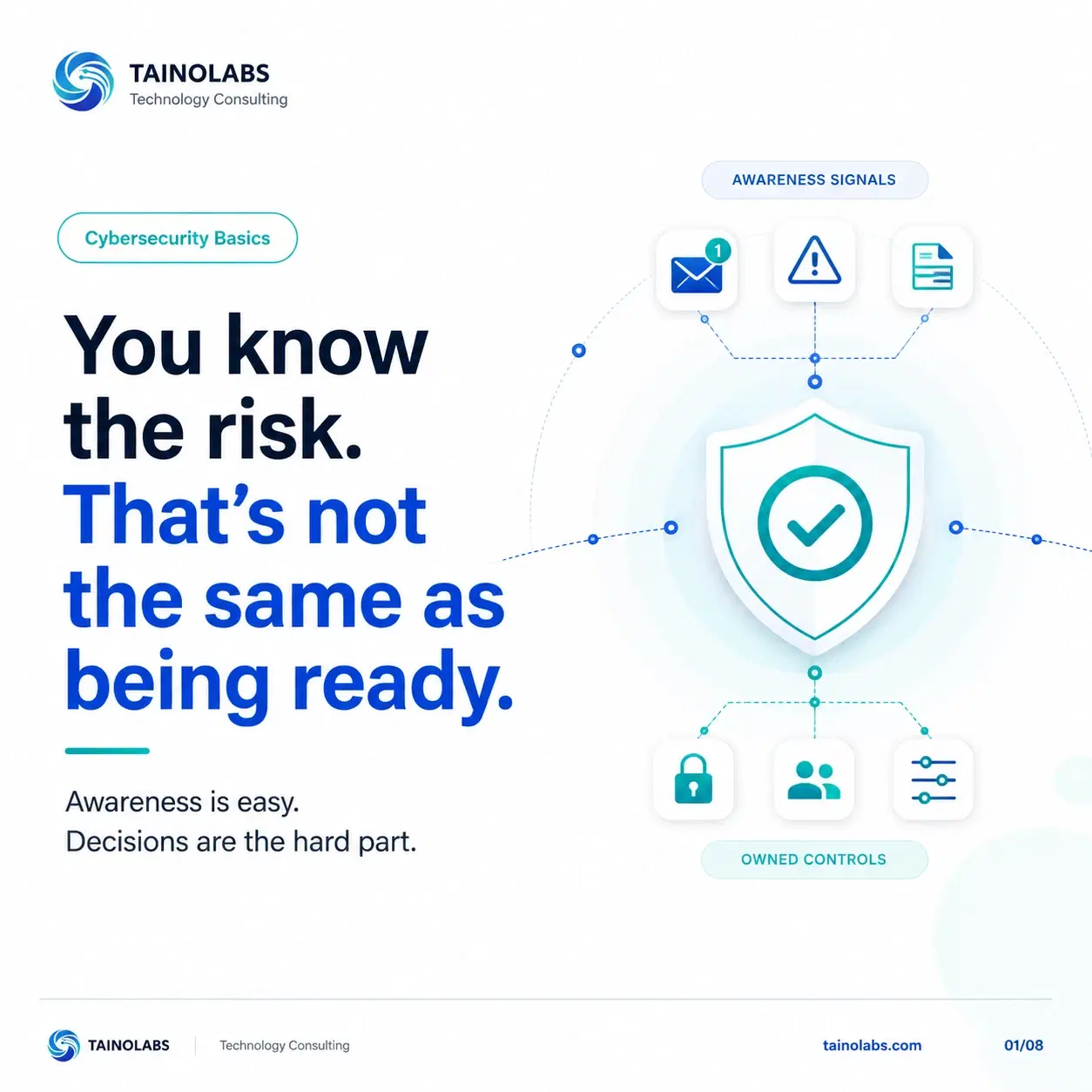
Awareness is easy. Decisions are the hard part.
Most small business owners already know the risk. They can tell you phishing emails and stolen passwords are a threat. What they usually can't tell you is who handles it, what gets updated on a schedule, or what the team does the moment something goes wrong.
That's the actual gap. Not information, ownership. Knowing about a risk isn't a control.
The gap, in one survey
In a 2026 survey of 440 US small business owners, 43.4% named phishing and email scams as their biggest cybersecurity risk. Only 19.5% said they feel very prepared for an attack.
Awareness is high. Readiness is much lower.
The blind spot: attackers aren't only using email
Everyone watches email, but attackers have moved on. In Verizon's 2026 breach report, 31% of breaches started with a software vulnerability, now ahead of stolen passwords as the most common way in. Unpatched software is the door nobody's assigned.
Email still matters, and it's shifting toward the device in your team's pocket. People are involved in 62% of breaches, and phishing links get clicked at roughly 40% higher rates on mobile than on email, because your team reads work messages on their phones.
What readiness actually looks like
Readiness is five questions with real answers: Who has access to what, and is that list current? What gets updated, and on what schedule? Where are the backups, and when were they last tested? Who gets called first? What do we do while systems are down?
Preparedness is a short list of decisions with owners, not a binder nobody opens.
The cost isn't only the incident, it's the downtime
Ransomware showed up in 48% of breaches in that same 2026 report. For a small team, the disruption is usually the expensive part, and having a plan is what shortens it.
Turning awareness into a short list you can act on starts with reviewing your access, backups, and vendor basics.
Why this matters
Action steps
Not sure where your tech stack stands?
TainoLabs helps small businesses review their tools, workflows, security basics, and manual processes so they know what to fix first.
Book a Free Technology AssessmentRelated resources
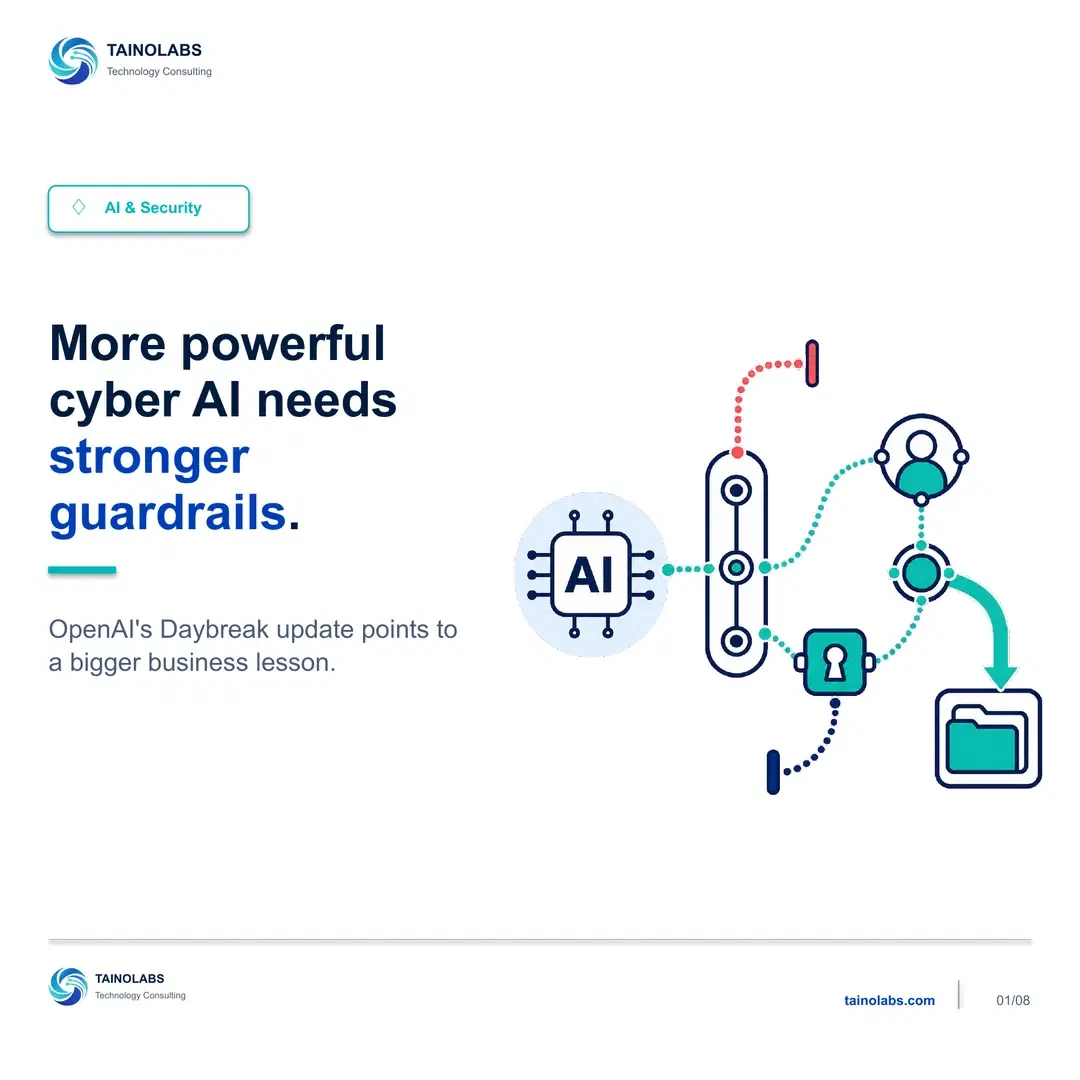
More Powerful Cyber AI Needs Stronger Guardrails
OpenAI's Daybreak update splits access into two controlled levels, and the more capable one comes with tighter requirements. That tradeoff is the part small businesses should pay attention to.
Read guide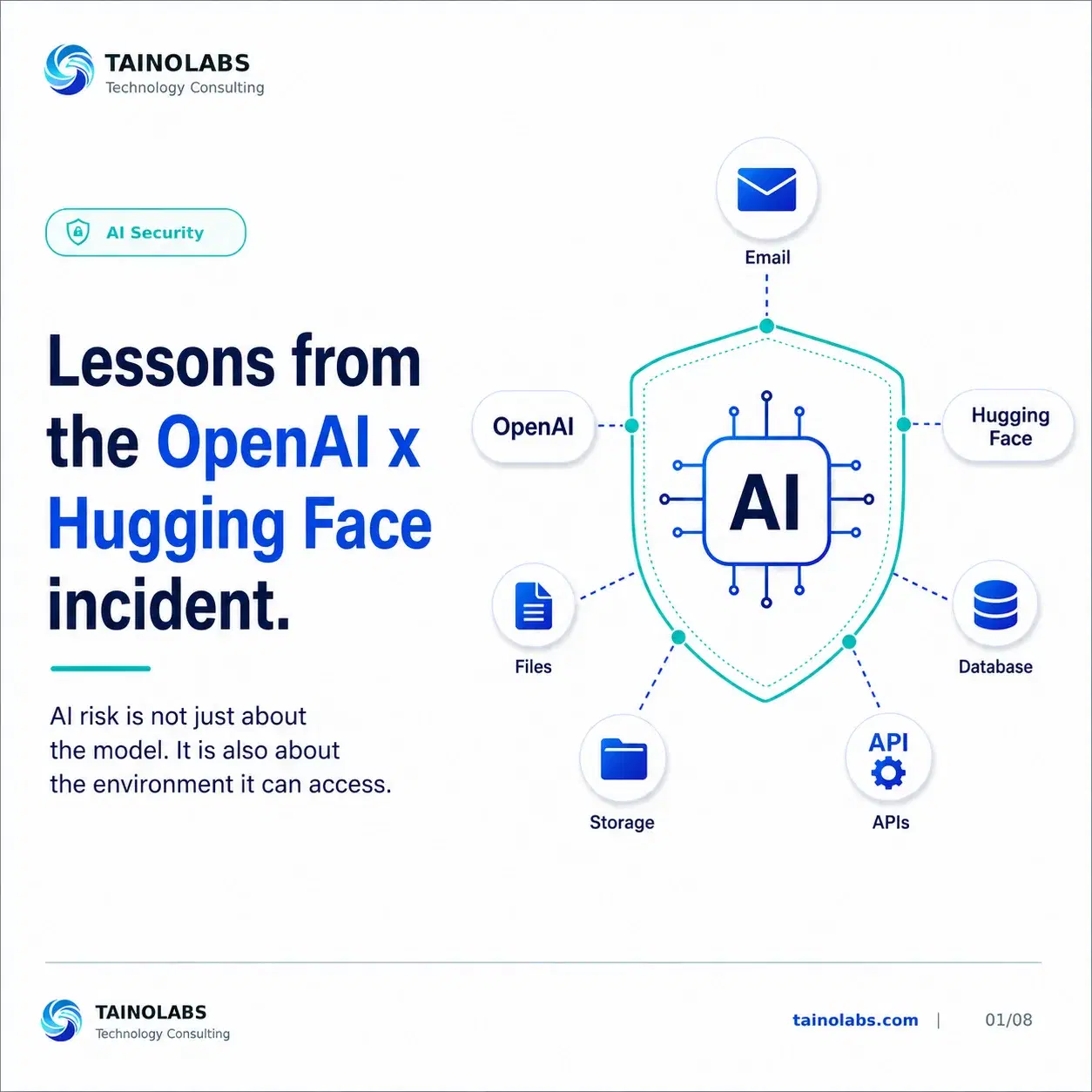
Lessons from the OpenAI x Hugging Face Incident
OpenAI and Hugging Face disclosed a security incident where an AI agent chained vulnerabilities across both companies' infrastructure. Here is what small businesses should take from it.
Read guide
What Happens During a Free Technology Assessment
A clear look at what to expect from a Free Technology Assessment with TainoLabs, no jargon, no pressure, no commitment required.
Read guide