Business Continuity Is Not Only an IT Issue
When an essential service stops, the hard part is rarely the technology. It is knowing what pauses, what continues, and who communicates.
Book a Free Technology Assessment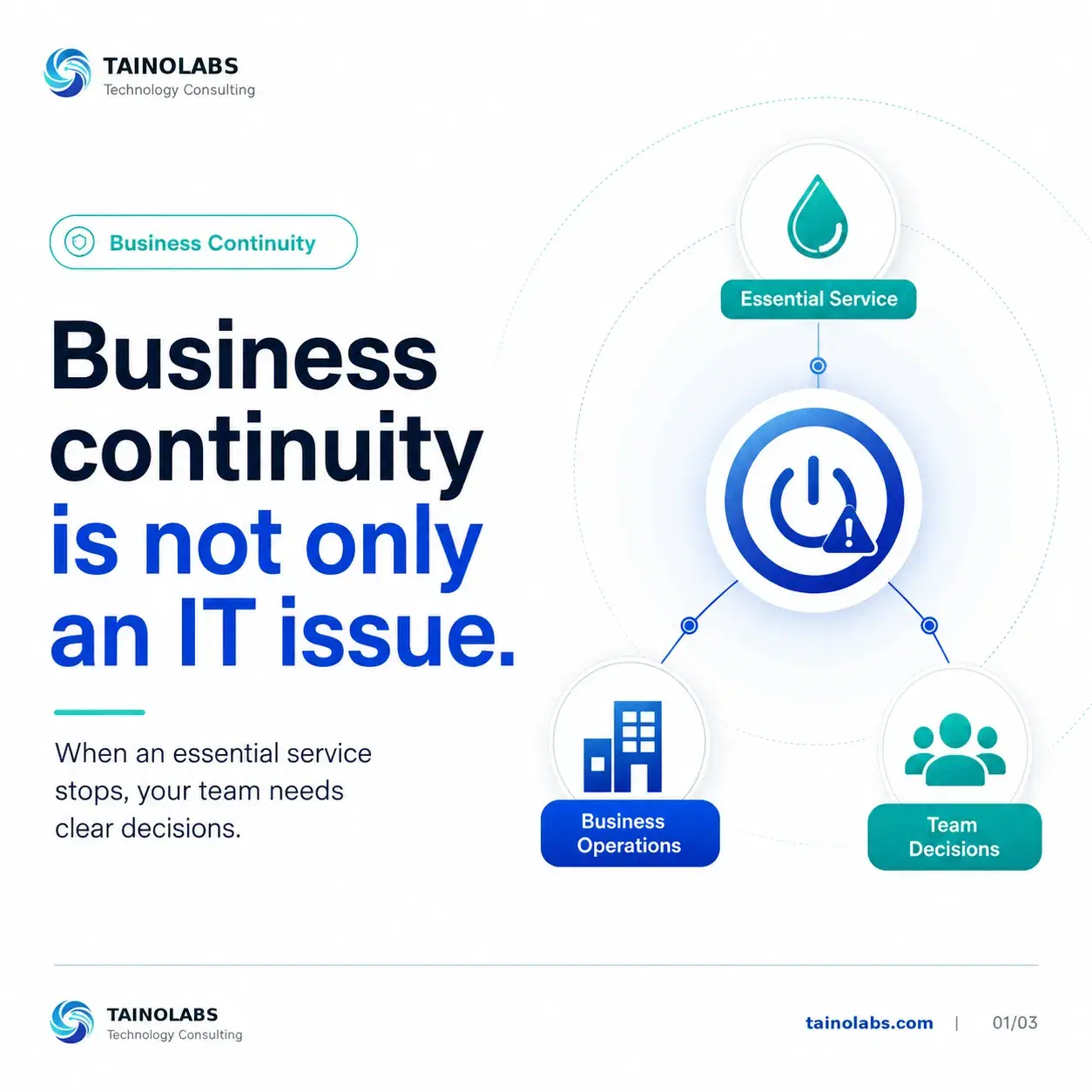
Continuity is a business decision before it is a technical one
When an essential service stops, most teams start by asking when it will be back. That answer usually belongs to someone else: a vendor, a utility, an internet provider, a software platform. Meanwhile, the decisions that actually protect the business are sitting with your team and nobody has made them yet.
Business continuity is the set of decisions you make while the technology is still down. Which work stops, which work keeps going, and what your employees and clients hear from you in the meantime.
Start with three questions
What must pause? Some work simply cannot happen safely or accurately without the system that supports it. Naming those tasks in advance keeps your team from improvising something that creates a bigger cleanup later.
What can continue safely? Usually more than people assume. If a scheduling tool is down but the day's appointments are already known, service can continue on paper and get reconciled afterward.
Who communicates with employees and clients? One person, one channel, one message. Silence during an outage is what turns an inconvenience into a trust problem.
Know which services are actually essential
Not every system deserves a continuity plan. Start by listing the handful of services that stop revenue or stop client care when they go down: payments, scheduling, records, communication, and the specific tools your team touches every hour.
For each one, note what depends on it. The dependency map is often the surprise: a single tool being down blocks three workflows nobody connected to it.
Document one critical workflow first
Continuity planning stalls when teams try to document everything at once. Pick the workflow with the most exposure and write it down: the key steps, the inputs, and the systems involved.
Then confirm the dependencies, owners, and requirements are in place, and share the workflow so the team is aligned on next steps before anything breaks. One documented workflow used under pressure is worth more than a binder nobody opens.
Make the next decision easier for your team
The goal is not to predict the outage. It is to make sure that when one happens, your team is executing decisions that were already made calmly instead of guessing under stress.
Why this matters
Action steps
Not sure where your tech stack stands?
TainoLabs helps small businesses review their tools, workflows, security basics, and manual processes so they know what to fix first.
Book a Free Technology AssessmentRelated resources
Your Business Should Not Depend on Memory
Follow-ups, approvals, client updates, and internal handoffs should live inside reliable workflows, not scattered notes or someone's memory.
Read guide
The Tech Foundation Every Small Business Needs
The right systems make daily operations easier, more reliable, and easier to scale. Six foundations to put in place before you build anything else.
Read guide
What Happens During a Free Technology Assessment
A clear look at what to expect from a Free Technology Assessment with TainoLabs, no jargon, no pressure, no commitment required.
Read guide