Building AI Agents Without Exposing Sensitive Data
Practical guardrails for using AI safely in real business workflows. Three risks to watch for, and a checklist to run before you deploy an agent.
Book a Free Technology Assessment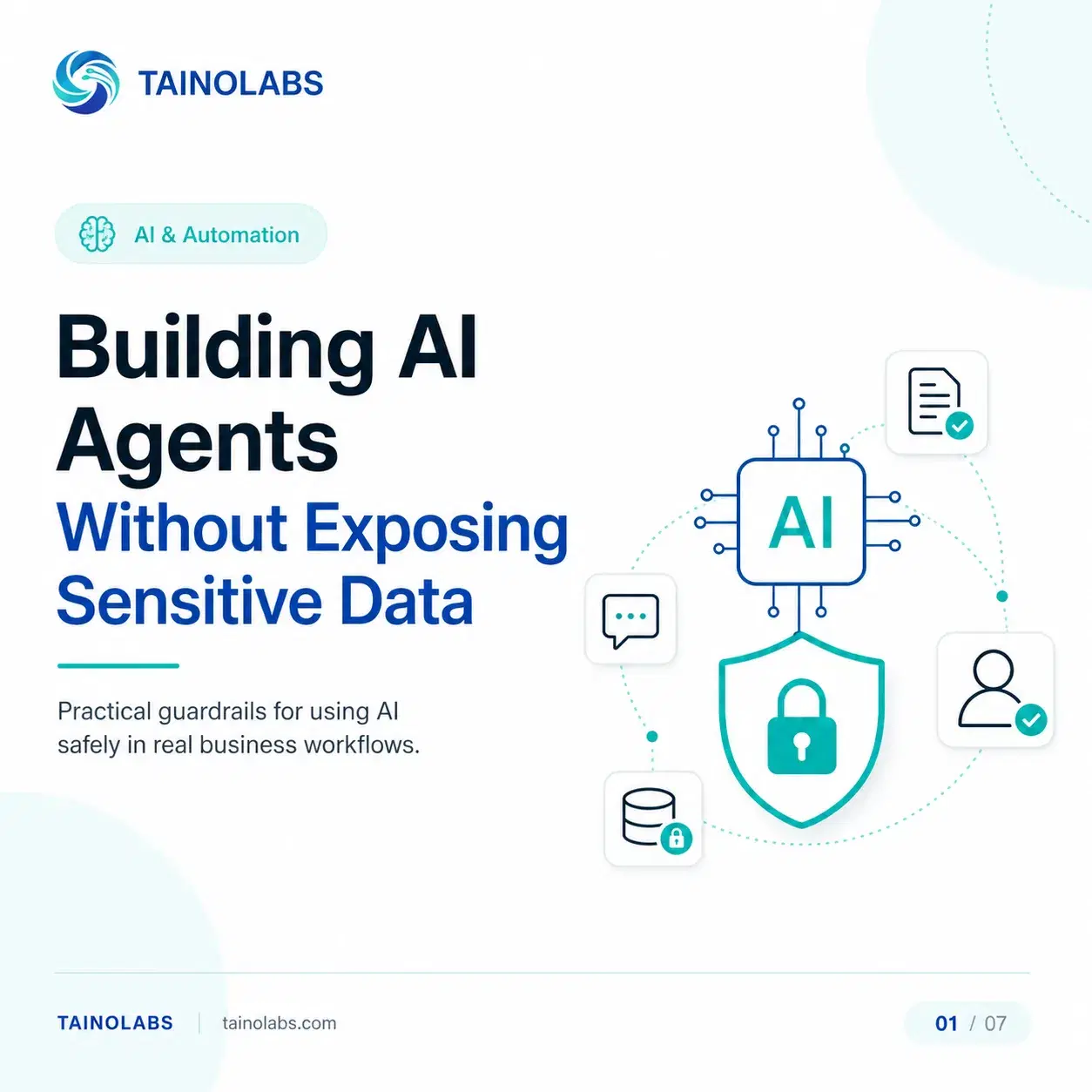
Why this matters
AI can streamline intake, follow-ups, and internal workflows, but sensitive data should never become an afterthought. Sensitive data can leak when access is too broad or tools are unapproved.
Safer AI starts with structure, not just prompts.
Risk 1: Uncontrolled access
An AI agent should only see the data it actually needs to complete the task. Connected inboxes, docs, and CRMs can expose more than intended if access isn't scoped.
Access should match the workflow, not the full system. Review roles, permissions, and data scope before connecting tools.
Risk 2: Shadow AI and unapproved tools
If your team uses random AI tools, sensitive business data can end up in the wrong place. Employees may paste client or internal data into public tools without realizing the risk.
Not every AI product belongs in a real business workflow. Standardize approved tools and set clear usage rules.
Risk 3: Weak guardrails
Without clear rules, AI agents may take actions or surface information that should require review. Define what the agent can read, write, and trigger, and use human approval for sensitive actions.
Keep logs, checkpoints, and clear escalation paths so every action is traceable.
The safer AI agent checklist
Before deploying an AI agent, start with the basics: use approved tools only, limit the data scope, apply role-based access, require human review for sensitive actions, and document and review the workflow regularly.
Why this matters
Action steps
Not sure where your tech stack stands?
TainoLabs helps small businesses review their tools, workflows, security basics, and manual processes so they know what to fix first.
Book a Free Technology AssessmentRelated resources
AI Agents Need Organized Business Knowledge
Why structure matters before automation. AI cannot work well from fragmented information, here's what to organize first.
Read guide
Knowing the Risk Isn't the Same as Being Ready
Most small business owners can name their biggest cybersecurity risk. Far fewer can say who owns it. That gap, not a lack of awareness, is what leaves a business exposed.
Read guide
What Happens During a Free Technology Assessment
A clear look at what to expect from a Free Technology Assessment with TainoLabs, no jargon, no pressure, no commitment required.
Read guide